

Project Summary
Client: Industrial Sensor Manufacturer (Sennos M3)
Project Type: Product Photography / Industrial Technology
Scope: Studio product imagery for marketing and technical use
Key Challenge: Controlling reflections and maintaining consistent shadow structure on a highly reflective cylindrical surface
Deliverables: Clean product images with multiple display states (LED on/off)
Overview
This project focused on producing clean, high-precision product imagery for an industrial fermentation sensor used in brewing environments. The goal was to create images that aligned with the client’s existing visual standards while improving clarity, consistency, and overall production quality.
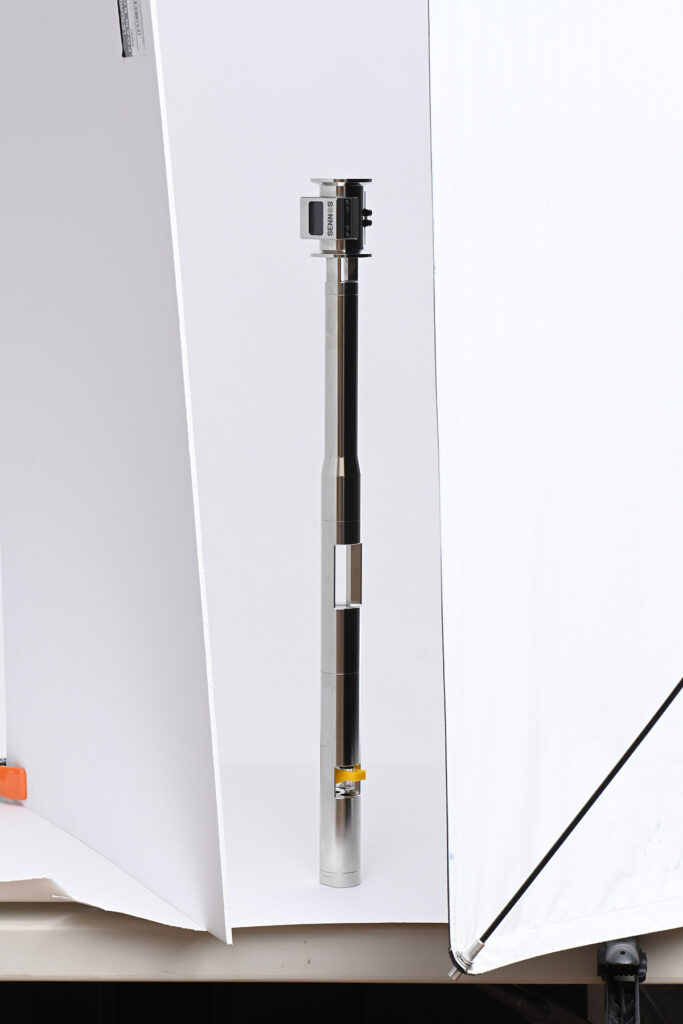
Because the product is a long, cylindrical stainless steel component with multiple reflective surfaces and cutouts, the photography needed to balance technical accuracy with visual control. Every surface needed to read clearly without introducing distracting reflections or uneven tonal transitions.
Pre-Production Planning
Pre-production centered on understanding how the product’s geometry would interact with light. The client had previously established a specific shadow and highlight structure, so the lighting needed to match an existing visual language rather than reinvent it.
Key considerations included:
- Maintaining consistent shadow direction and edge definition
- Controlling specular highlights across cylindrical surfaces
- Ensuring label readability without introducing glare
- Planning for both LED-on and LED-off capture variations
The lighting approach was designed before shooting began to minimize guesswork during production.
Studio Production Workflow
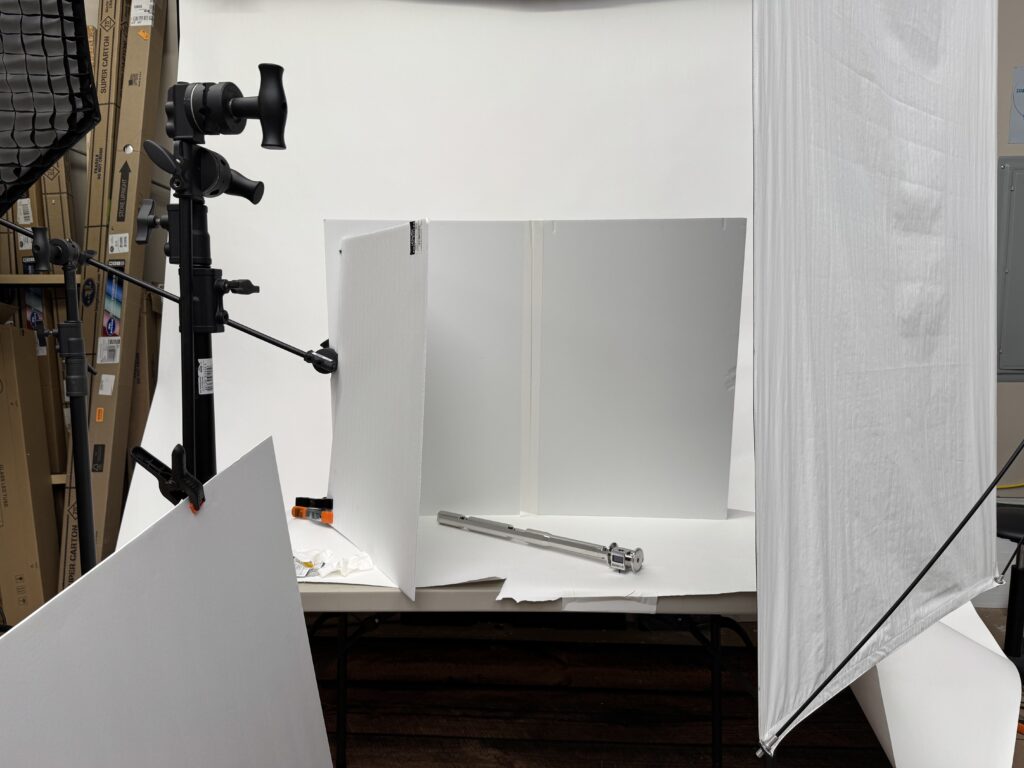
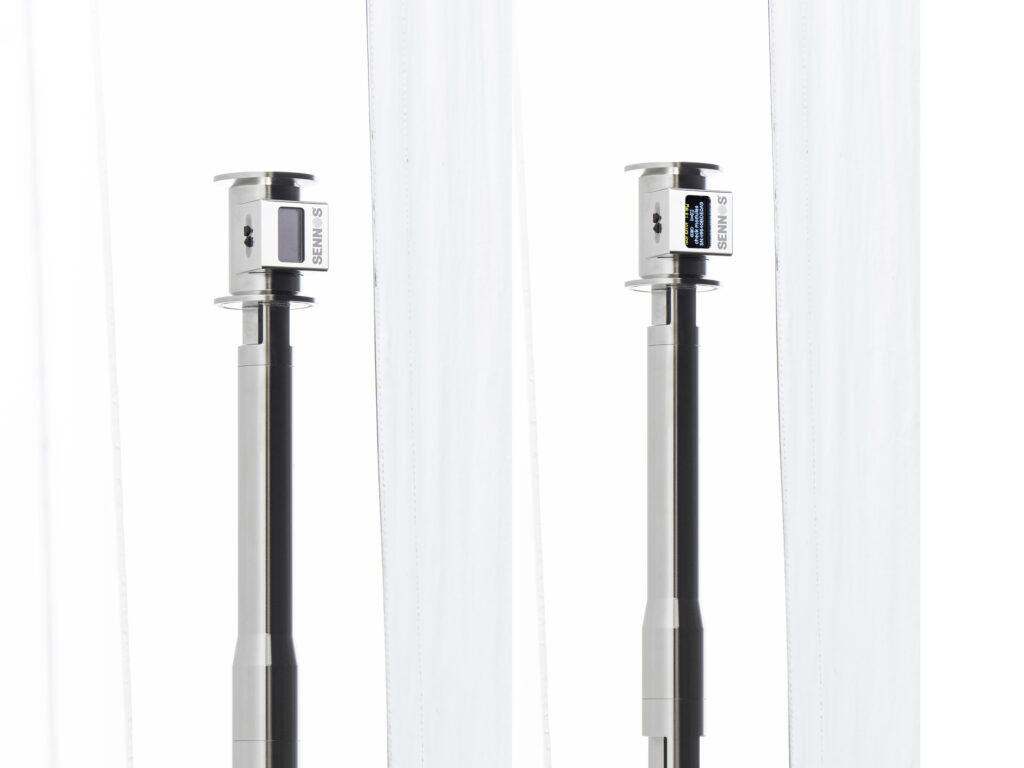
The studio setup relied heavily on controlled reflection rather than direct lighting. Large white bounce surfaces and diffusion panels were positioned to create clean, continuous highlight gradients across the metal body.
Instead of lighting the product directly, the environment around the product was shaped:
- White cards created controlled highlight bands
- Negative fill was used to define edges and break up reflections
- Diffusion panels softened transitions across curved surfaces
- The product was isolated to prevent environmental contamination in reflections
This approach allowed precise control over how each section of the sensor rendered in-camera.
Capturing the Process
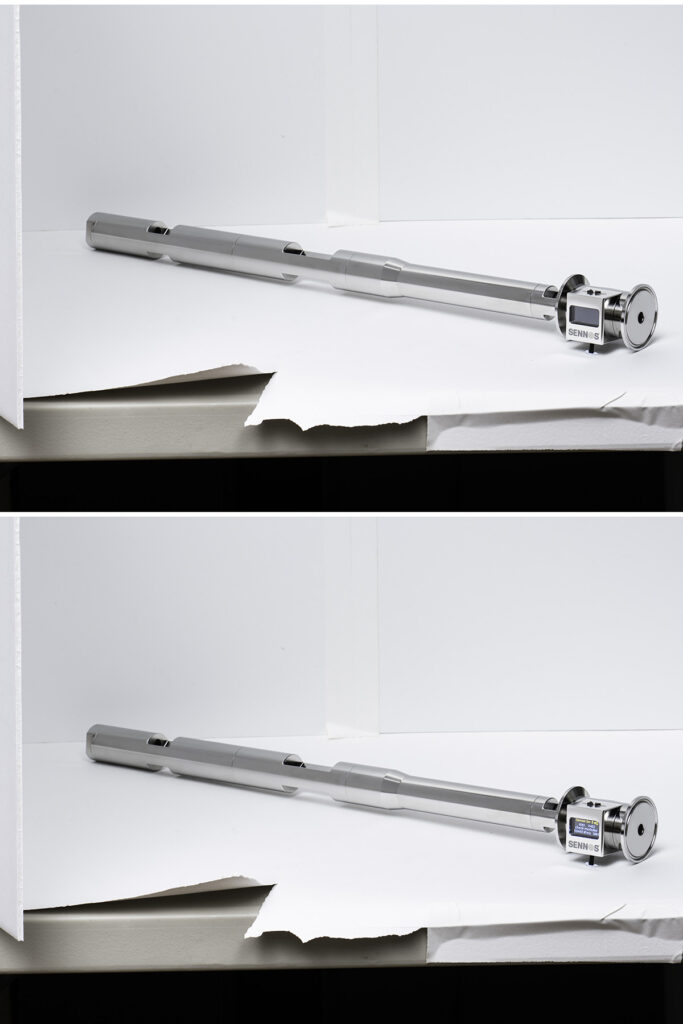
Because of the product’s reflective nature, small adjustments had a significant impact on the final image. The process involved iterative refinement of reflector placement and camera angle to achieve consistent surface rendering across the entire length of the sensor.
A key technical challenge was the LED display:
- The display content was actively scrolling
- The refresh rate created flickering and partial reads
- Exposure needed to balance motion freeze and screen visibility
To resolve this, the capture process required precise timing and exposure control to produce a clean, legible display without artifacts.
Multiple frames were captured with variations in timing and exposure to ensure usable display states.
Consistency Across Product Variations
Consistency was a critical requirement for this project. The lighting and camera position were locked to ensure that all images could be used interchangeably across marketing, technical documentation, and future product variations.
By maintaining fixed lighting geometry:
- Highlight placement remained consistent
- Shadow structure matched existing brand imagery
- Product variations could be added later without reworking the visual system
This production-first approach allows the client to scale their product imagery over time.
Final Deliverables
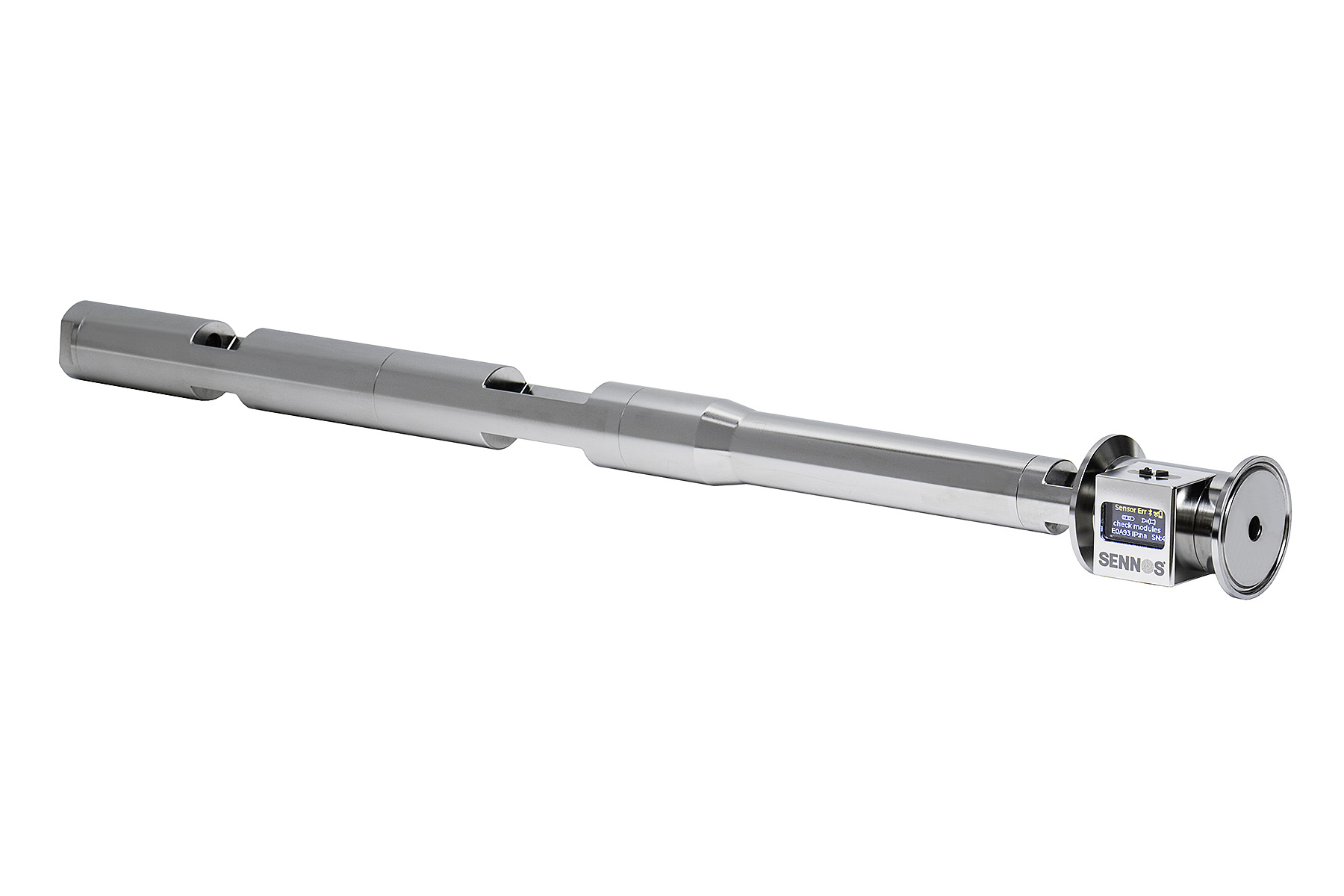
Final deliverables included a structured set of high-resolution product images designed for both marketing and technical applications.
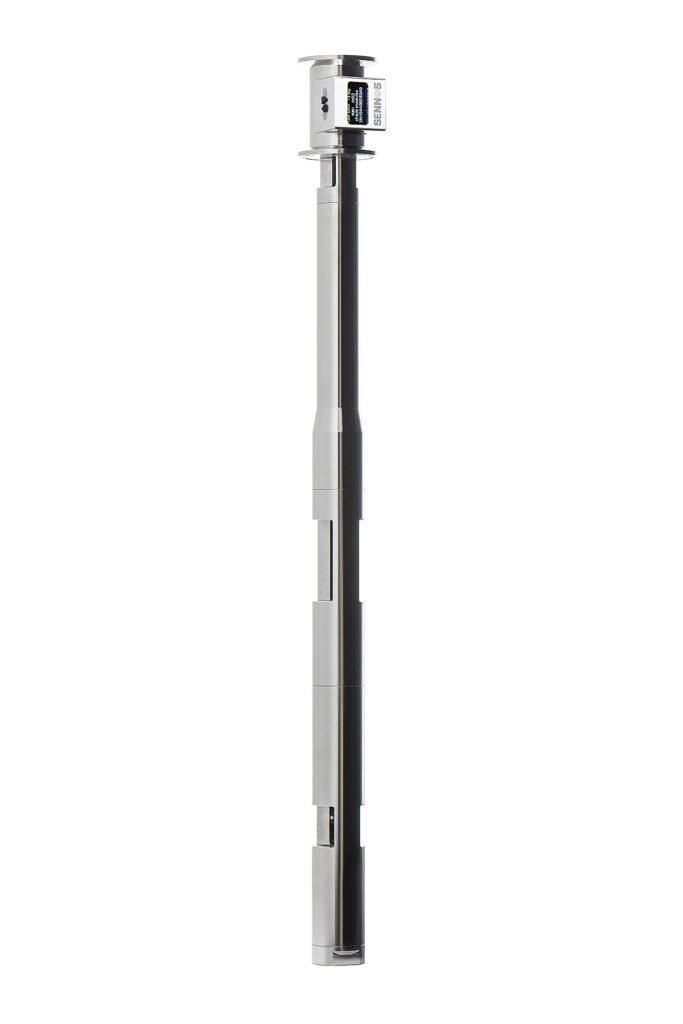
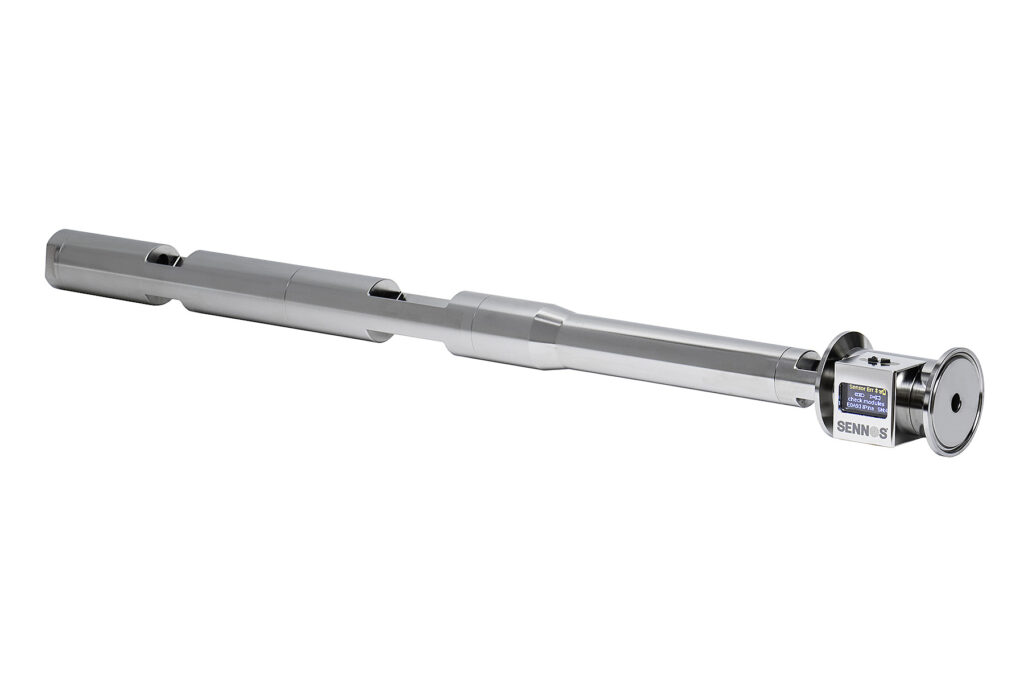
Two primary compositions were produced:
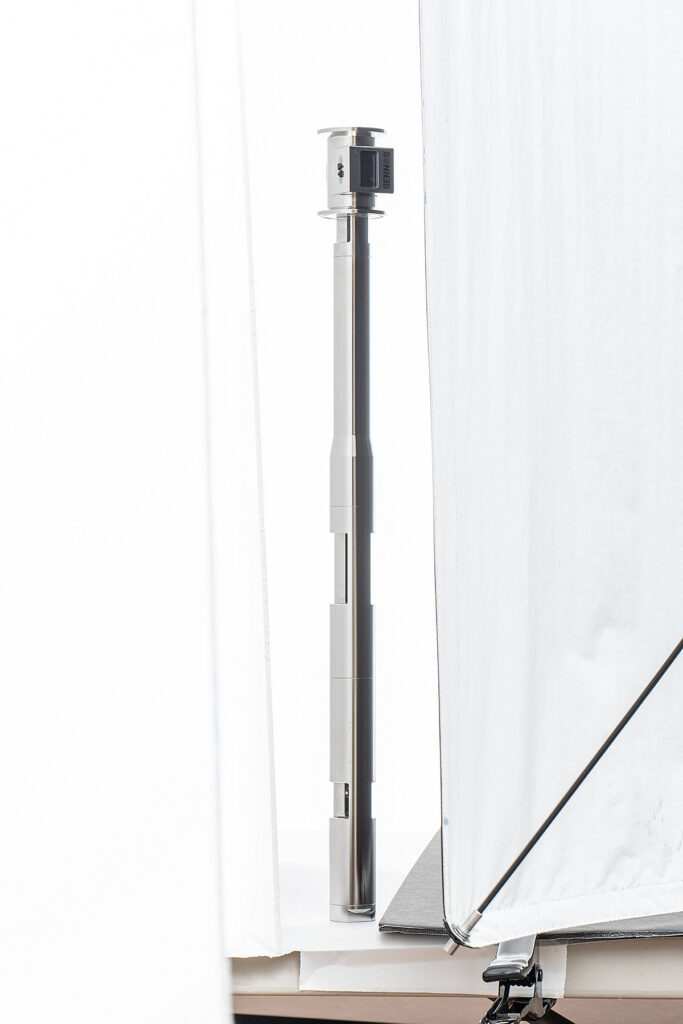
- Upright (technical / catalog orientation)
- Isometric (marketing / presentation angle)
Each composition was delivered in two variations:
- LED display active
- LED display inactive
This approach provided the client with flexibility across use cases while maintaining complete visual consistency. The LED-off versions offer a clean, distraction-free presentation, while the LED-on images preserve functional context for product demonstrations and technical communication.
All imagery was processed to ensure:
- consistent tonal balance across both compositions
- controlled highlight transitions on reflective surfaces
- accurate material rendering
- clean, repeatable edge definition
The final set establishes a scalable visual system that allows additional products or future variations to be integrated without reworking the overall lighting or composition approach.